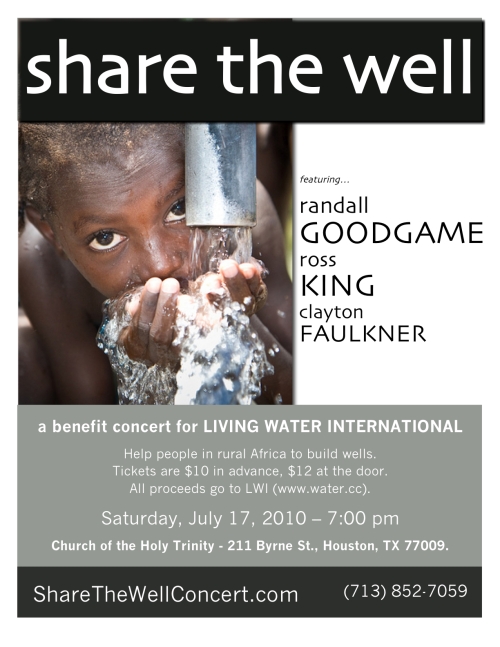

Posted in Evangelism | Tagged Clayton Faulkner, the meridian | Leave a Comment »
I am now blogging exclusively at ClaytonFaulkner.com!
Please update your subscriptions, blog rolls, and links. Thanks!
On top of new blog posts, you can also download all my music there for FREE.
Posted in Uncategorized | Leave a Comment »
 Sometimes life makes you slow down. Sometimes life makes you speed up. This has been a slow down season for me. Which is really interesting considering we’re smack dab in the middle of Lent. Lent is when you are supposed to reflect and count the cost. I’ve been away from church work and leading worship for 4 weeks. And I haven’t missed it too much. There is no void or empty feeling nagging at me. Maybe I’m not created for religion? Maybe I’m created for relationship?
On March 1, 2010 we met our second son, Masamo, in Ethiopia. We spent a week there getting to know him and enjoying the hospitality of the Ethiopian culture. Now I’m taking some more time doing the important work of bonding with our new kid. You can read about our trip and learn more at http://MeetTheFaulkners.com.
“Religion that God our Father accepts as pure and faultless is this: to look after orphans and widows in their distress and to keep oneself from being polluted by the world.” ~James 1:27
“He defends the cause of the fatherless and the widow, and loves the alien, giving him food and clothing.” ~Deuteronomy 10:18
Posted in Adoption, Children, Family | Tagged Adoption, Ethiopia, Family | Leave a Comment »
Bob Kauflin offers some good suggestions for worship songs on Easter Sunday (April 4)…
Happy Day – Tim Hughes
Uptempo celebration of Christ’s victory over the grave.
The greatest day in history
Death is beaten, you have rescued me
Sing it out, Jesus is aliveHis Name is Jesus – Judah Groveman
All Hail the Power with a new chorus.
His name is Jesus, risen Lamb for sinners slain.A Tomb So Cold – Joel Payne
Uptempo, two verses and bridge.
A tomb so cold, no fitting place
for one whom death could never hold.
You broke the chains, defeated sin,
and glorified you rose again, and you’re reigningResurrection Day – Matt Maher
Uptempo song of celebration.
It’s the power in your blood, breaks away sin’s embrace
And we celebrate our freedom dancing on our broken chainsGlorious – Paul Baloche
Mid-tempo song that celebrates the glory of the risen Christ.
Look inside the mystery see the empty cross
See the risen Savior victorious and strong
We Believe – Sam Hargreaves
Uptempo, three verses that explore the suffering Savior, living Savior, and coming Savior.
Christ has died, Christ is risen, Christ will come again.You Alone Can Rescue – Matt Redman
Mid-tempo song that emphasizes our inability to save ourselves.
You alone can rescue, You alone can save
You alone can lift us from the graveSaving One – Starfield
Eminently singable song that proclaims the effects of Christ’s resurrection in our lives.
His love has made a way, the grave is overcome
Jesus is the Christ, the saving OneChrist is Risen – Jeremy Riddle
Anthemic song that celebrates Christ’s victory over the grave. May be better as a special.
Quickly now go tell the world Christ, the Lord, He is risen
The power of death could never hold Him in the graveCome, Christians Join to Sing – Alt. lyrics vs. 3 and 4 Kevin Hartnett
A great hymn made even better by the lyrical additions of my friend, Kevin Hartnett.
Come, praise the risen Lamb, Alleluia! Amen!
He died to ransom man, Alleluia! Amen!See What a Morning – Keith Getty and Stuart Townend
12/8 triumphant hymn filled with passionate theology.
See God’s salvation plan wrought in love, borne in pain, paid in sacrifice,
Fulfilled in Christ, the Man, for He lives: Christ is risen from the dead!The Power of the Cross – Keith Getty and Stuart Townend
Destined-to-be-a-classic modern hymn that focuses on the meaning of Christ’s sufferings.
Curtain torn in two, dead are raised to life
“Finished!” the victory cryThe Risen Christ – Keith Getty and Phil Madeira
Hymn-like prayer, asking the triune God to help us know the Risen Christ.
O breath of God, come fill this place
Revive our hearts to know your grace;
And from our slumber make us rise
That we may know the risen Christ.My Redeemer Lives – Samuel Medley
Some additional lyrics to this hymn on the Cyberhymnal site.
He lives to silence all my fears, He lives to wipe away my tears
He lives to calm my troubled heart, He lives all blessings to impart.I Will Rise – Chris Tomlin
Chris personalizes the impact of the resurrection and ties it to Christ’s return.
I will rise when he calls my name, no more sorrow, no more pain.Redeemer – Nicole Mullen
A great special, especially if you have a soulful vocalist and choir who can “bring it.”
The same gentle hands that hold me when I’m broken
They conquered death to bring me victory
Posted in Worship Design | Tagged bob kauflin, easter, music, set list, song, worship | 1 Comment »
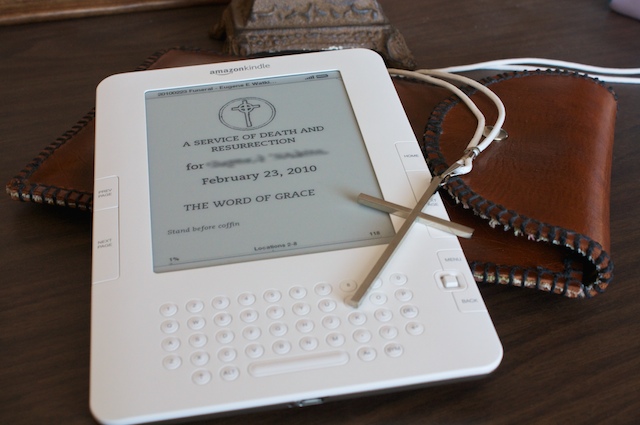
I’m always a fan of using current technology in unique ways to the benefit of worship. Here is a report on someone using their Kindle to lead a funeral…
If you aren’t familiar with it, the Kindle’s screen uses e-ink. It is a technology that is reflective, meaning that unlike most screens which shine a light in your face, e-ink looks just like a piece of paper. Of course it also brings the usual digital advantages, like enlarging the text at the push of a button.
My usual process is to customize the service on the computer then print it out. In this case all I had to do was prep the service in Google Docs then hit the “Share” button to email everything wirelessly to my Kindle. At first there were some formatting problems, but a few easy tweaks and it worked like a charm. The liturgy was beautiful and easy to read.
Posted in Technology | Tagged funeral, kindle, liturgical nerds, Technology | 1 Comment »
@SarcasticLuther (Nadia Bolz-Weber) tweeted:
every week I look at the texts for Sunday and think “sh*t. i have absolutely nothing to say about this. i’ve had a good run but it’s over”
I love it. Refreshingly truthful. While it might seem like having nothing to say about a Scripture text is a bad thing, it actually is very good. At the end of human understanding and wisdom, the knowledge of the Lord and the movement of the Spirit step in. Having nothing to say can allow the space for God to say what needs to be said.
I think this is something worship musicians struggle with a lot also. Every week we are faced with the equal task of ordering and supporting an environment that best supports the Word of God and the work of the Spirit. Even selecting songs can feel uninspiring and impossibly cliche. How do you consistently find ways to gather people together in a spirit of confession, adoration, praise, and humility – every 7 days. Once again, this is a good place to let go and let the Spirit do the leading.
Posted in worship, Worship Design | Tagged @sarcasticluther, Nadia Bolz-Weber, preaching, twitter, worship | Leave a Comment »
The bands I work with probably get tired of hearing me say it – but I’m not sure it can be said enough: “Less is more.” Having the musicians/singers be picky about when they play/sing does a lot for the dynamics of a song. But it also does something on a spiritual level. It allows other members’ gifts to shine through. It allows everyone the opportunity to practice the “prefer others more than yourself” attitude (an essential attitude for any collection of worshipers).
From Greg Atkinson:
If you’re a worship pastor that leads a band and you let your musicians play 100% all the time, you’re dropping the ball (you know I like to shoot straight). I mentioned that when I visit churches I often look for a laptop on stage. But one of the first things I look for is who is not playing. The difference between an amateur musician and a professional is knowing when not to play. It’s the whole “less is more” thing that I always preach.
Maybe this is something that your church band struggles with. Maybe you have a pianist that used to be “the band” and is used to playing the full 100% of the music. Now that a guitar, bass and drums are added in, she doesn’t know that her role must decrease and she must adjust the amount of action or busyness that she plays with in order to allow the other instruments to equal to 100%. This is what I call the 100% rule. You only have 100% to divide up – any one player can’t play like the 100% is up to him/her.
Let’s get practical: Often to make a point, I will go to the extreme. I used to do this with my camera operators and video directors all the time. When working with church bands, I will often ask players to “sit out” or restrain from playing for a LONG period of time – in order to get the point across.
Posted in Bass, Drums, Electric Guitar, Guitar, Keyboard, worship, Worship Band | Tagged dynamics, greg atkinson, Worship Band | Leave a Comment »
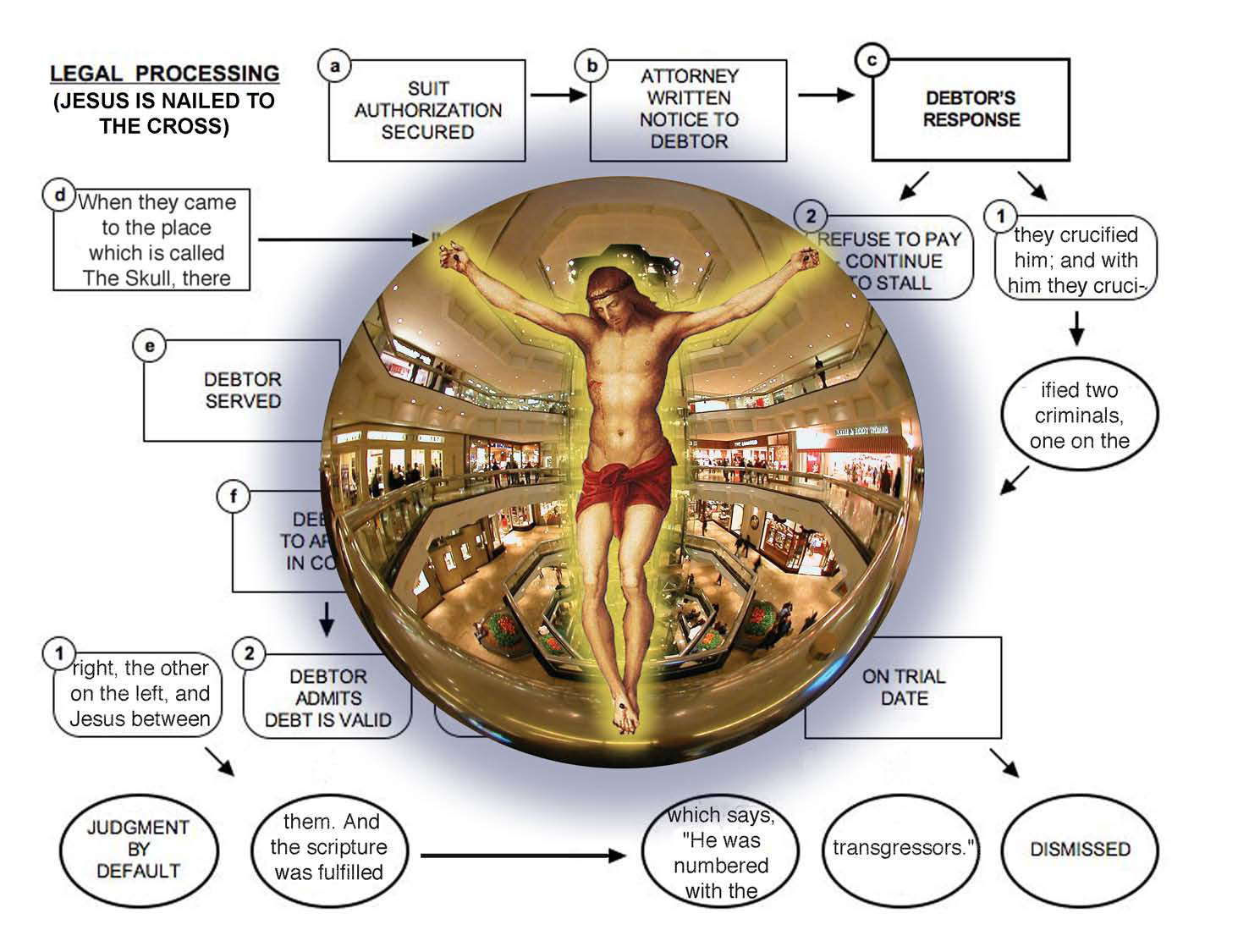
An interesting take on “The Stations of the Cross” by Paul from St. Gregory of Nyssa Episcopal Church in San Francisco. These would make a great reflection piece on Good Friday.


Posted in Emerging Church, worship | Tagged art, postmodern, St. Gregory of Nyssa Episcopal Church, stations of the cross | 1 Comment »
Psalm 146:7 – “He upholds the cause of the oppressed and gives food to the hungry. The LORD sets prisoners free,”
Isaiah 58:6-8 – “Is not this the kind of fasting I have chosen: to loose the chains of injustice and untie the cords of the yoke, to set the oppressed free and break every yoke? Is it not to share your food with the hungry and to provide the poor wanderer with shelter—when you see the naked, to clothe him, and not to turn away from your own flesh and blood? Then your light will break forth like the dawn, and your healing will quickly appear; then your righteousness will go before you, and the glory of the LORD will be your rear guard.”
Posted in The Bible, Video | Tagged Food Pantry, St. Gregory of Nyssa Episcopal Church | Leave a Comment »
Twitter
Tweets by claytonfaulknerFind me on…
-
Join 6 other subscribers
Need a church website? I highly recommend:

Pick a topic
Recent Comments
claytonfaulkner on Audio Mix Pyramid Kris Jim on Audio Mix Pyramid joelhatley on Philosophy of Worship, part… Resources for Zephan… on Sermon on Luke 3:7-18 (Advent… jupebox on Easter Song Suggestions Archives

 -
-  -
-  -
-  -
- 


 The Complete Worship Musician